Preventive vs Breakdown Maintenance for Transformers: Which Approach Is Better?

Preventive maintenance is the best method for any grid connected transformer. This is because unplanned failure has costs breakdown maintenance never includes outage penalties, safety risk and accelerated equipment loss. Breakdown maintenance only makes sense for low-criticality, easily replaceable units where an outage has minimal downstream impact.

Breakdown Maintenance

What Is Breakdown Maintenance for Transformers?

Breakdown maintenance, also called run-to-failure maintenance. It means a transformer receives no scheduled inspection or testing. It’s repaired or replaced only after it fails in service.

Example: A 500 kVA distribution transformer serving a residential feeder overheats and trips at overnight. No oil sampling or thermal inspection had been done in over 18 months. The utility dispatches an emergency crew, and 400 customers lose power for 6 hours while a replacement unit is sourced and installed.

This isn’t always poor practice. For low-criticality spares with fast replacement paths, breakdown maintenance can be appropriate choice. The problem is when it’s applied by default to transformers that actually matter to grid reliability.

What Is Preventive Maintenance for Transformers?

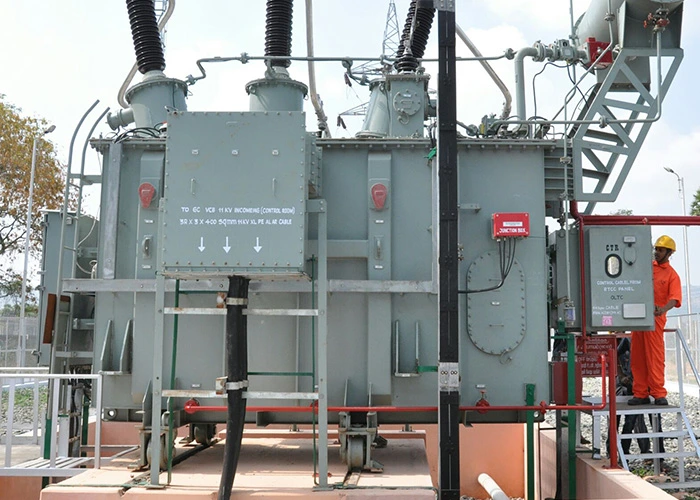
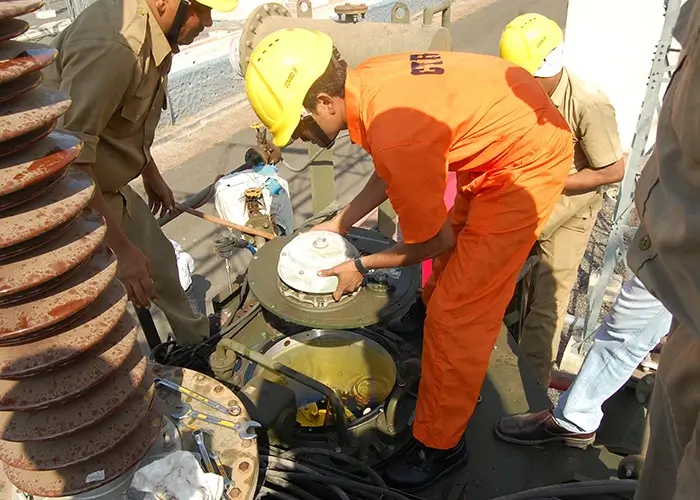
Preventive maintenance is the systematic inspection, testing and servicing of a transformer on a predetermined schedule, whether the transformer shows symptoms or not, to detect degradation before it leads to failure. For utility transformers this usually means dissolved gas analysis (DGA), insulation resistance testing, on load tap changer inspection and thermal imaging.

Example: A utility performs a semi-annual DGA on a substation power transformer. The test picks up rising levels of ethylene and acetylene, a fingerprint of internal arcing. The tap changer service is scheduled for a planned weekend outage, rather than the transformer failing during peak summer load.

The core difference is control. Preventive maintenance lets the utility choose when the outage happens. Breakdown maintenance lets the transformer choose.

Preventive vs Breakdown Maintenance: How Do They Compare?

Factor Breakdown Maintenance Preventive Maintenance
Upfront cost Lower, no recurring testing Higher, scheduled testing and labor
Outage type Unplanned, often hours long Planned, minutes to a few hours
Regulatory exposure Higher risk of SAIDI/SAIFI penalties Lower, outages are scheduled and reported
Equipment lifespan Shortened by unaddressed thermal and electrical stress Extended through early fault detection
Fire and safety risk Higher, faults can progress undetected Lower, degradation caught before critical failure
Best suited for Redundant, low-criticality spares Grid-critical, single-point-of-failure units

Cost Comparison: Scheduled Spend vs Unplanned Failure Cost

Breakdown maintenance appears cheaper because there’s no recurring testing line item. But unplanned failure typically costs 3 to 10 times more once emergency crew rates, expedited parts, and regulatory penalties are included. A substation transformer failure causing a multi-hour outage can trigger SAIDI/SAIFI penalty exposure that alone exceeds years of DGA testing costs.

Downtime and Grid Reliability Risk

Preventive maintenance doesn’t remove outages; it converts unplanned outages into planned ones. A scheduled two-hour maintenance window during low-load periods is a fundamentally different reliability event than an unplanned outage during peak demand.

Impact on Transformer Lifespan and Tap Changer Wear

On-load tap changers are one of the most overlooked failure points in utility transformers. Contact wear, arcing, and mechanical fatigue build gradually and rarely show symptoms until a tap change fails under load. Preventive inspection catches contact erosion early. Breakdown maintenance lets it progress until the tap changer jams or fails, often taking the entire transformer out of service.

When Is Breakdown Maintenance an Acceptable Strategy for Utilities?

Breakdown maintenance is defensible when:

  • A redundant unit or N-1 contingency exists and can absorb load immediately
  • Replacement lead time is short and inventory is on hand
  • The transformer serves a low-criticality, non-priority feeder
  • Failure carries no meaningful safety or fire risk

Why Are Utilities Shifting Toward Preventive and Condition-Based Maintenance?

Most utilities move to preventive maintenance after absorbing the true cost of one major unplanned failure, not from a general safety philosophy. The math simply stops favoring reactive maintenance once outage penalties, emergency labor, and reputational cost are counted. There’s also an insurance dimension utility managers should not overlook. Many insurers and some regulatory frameworks require documented maintenance records to process claims after a failure. A transformer maintained purely on a breakdown basis, with no inspection history, can complicate claims even when the failure itself wasn’t preventable.

Fire risk adds another issue. Oil-filled transformers that fail without warning carry meaningful fire and explosion risk. Utilities managing this exposure often pair preventive testing with fire prevention systems designed to suppress a fault before it escalates, rather than relying on maintenance schedules alone to catch every failure mode in time.

How Should a Utility Decide Between the Two Strategies?

Most utilities don’t run one strategy fleet-wide. They tier transformers by criticality and apply preventive maintenance only where failure carries real consequence.

Decision Checklist for Maintenance Managers

  • Identify whether an N-1 contingency or redundant unit exists for this transformer.
  • Calculate outage cost, including regulatory penalty exposure, not just repair cost.
  • Check replacement lead time for this transformer class.
  • Review insurer and regulatory documentation requirements for maintenance records.
  • Tier the unit: grid-critical or single-point-of-failure transformers go to preventive maintenance; redundant, low-consequence units can remain on breakdown maintenance.
  • Set a baseline testing interval for critical units, typically semi-annual DGA with annual thermal and tap changer inspection.

If projected outage cost, including penalty exposure, exceeds the annual cost of preventive testing, preventive maintenance is the correct choice.

Where Does Predictive Maintenance Fit In?

Predictive maintenance uses continuous condition monitoring, online DGA sensors, thermal sensors, and partial discharge detectors; to flag degradation as it happens rather than at fixed inspection intervals. It doesn’t replace preventive maintenance, it extends it. Instead of testing every six months and hoping nothing develops in between, continuous monitoring catches a fault the moment it starts.

For grid-critical substation transformers, predictive monitoring is increasingly replacing fixed-interval testing because it reduces both inspection labor and the risk of a fault developing between scheduled checks.

FAQ

Preventive maintenance inspects and tests transformers on a fixed schedule to catch faults early. Breakdown maintenance repairs or replaces the transformer only after it fails.

Yes, for redundant, low-criticality units with fast replacement paths and no meaningful safety or reliability consequence.

Most utilities test critical substation transformers semi-annually, with annual thermal and tap changer inspection, though load and age can justify more frequent testing.

Insulation breakdown from thermal stress, on-load tap changer wear, moisture ingress, and loose electrical connections account for most utility transformer failures.

Yes, many manufacturers and insurers require documented maintenance records, and gaps in that history can complicate warranty claims or insurance payouts after a failure.

For grid-critical transformers, yes. Continuous condition monitoring is increasingly preferred over fixed-interval testing because it detects faults in real time rather than only at scheduled checkpoints.