Nitrogen based Explosion Prevention and Fire Extinguishing System for oil filled Transformers and Reactors
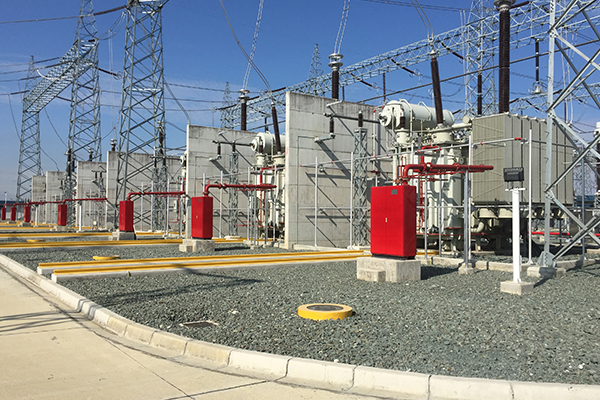
Overview
Nitrogen based Explosion Prevention and Fire Extinguishing System (NIFPS system for transformer) solutions for oil-filled power transformers and reactors. It is used in power plants, substations, steel plants, renewable energy projects, railways, data center and other industrial power systems. This new generation system proactively detects and suppresses transformer explosion fire which caused by internal arcing, winding faults, overheating, OLTC failure, bushing oil filled cable box and abnormal pressure rise etc
- Isolates the conservator tank
- Drains a controlled quantity of hot oil
- Injects nitrogen gas with predetermined pressure and flow into the transformer tank
- Suppresses fire by reducing oxygen concentration
Technical Specifications of NIFPS System for Transformer
| Suitable Transformer Rating | 5 MVA to 500 MVA and above |
| Applicable Voltage Class | Up to 765 kV systems |
| Nitrogen Cylinder Capacity | 50L / 68L / Customized capacity |
| Nitrogen Gas Purity | 99.9% dry nitrogen |
| Operating Pressure | 150–200 bar cylinder pressure |
Excellence in Numbers
How NIFPS System for Transformer / Reactor Works
Fault Detection
Fast and effective internal and external fault detection using independent electro-mechanical sensors. For internal fault detection , electrical sensor say differential proteciton along mehanical sensor with either of say the Buchholz relay (detecting gas or oil surge inside the tank), a rate-of-rise pressure sensor, or a tank pressure relief valve — can trigger the system. A manual push-button is also available for operator-initiated activation For fire fault detection , fire detecting sensor along with mehanical sensor with either of say the Buchholz relay (detecting gas or oil surge inside the tank), a rate-of-rise pressure sensor, or a tank pressure relief valve — can trigger the system. A manual push-button is also available for operator-initiated activation
Phase 2
Confirmation and Trip
The transformer is tripped from the electrical supply via breaker interlock. This ensures no new electrical fault energy enters the transformer during suppression. A SCADA alarm is simultaneously raised instantly.
Phase 3
Oil Drain and Depressurisation
These two actions run in parallel. The quick drain valve on the drain line opens, and transformer oil gravity-drains into a sealed oil separation pit (sized at approx 10% of total oil volume). At the same time, transformer reservior , conservator isolates from tank oil and the nitrogen cylinder bank with precaluculated gas qunatiy is pressurised through the regulator to injecte nirogen with pre determined flow and pressure.
Phase 4
Nitrogen Gas Injection
Once sufficient oil has drained, the N₂ injection valve opens and dry nitrogen (≥ 99.9% purity) floods the tank. Oxygen concentration falls below 2%, which is below the threshold for sustained combustion.The oil in the sealed pit is protected and can be re-tested and reused after the incident, significantly reducing restoration cost and time.
Phase 5
Positive pressure hold
A nitrogen pressure is always present inside the tank. This positive pressure prevents atmospheric air (and therefore oxygen) from re-entering the tank. Also,eliminating any risk of re-ignition until maintenance crews arrive.
Application of Nitrogen Injection Fire Protection System

Thermal Power Plants
Generator step-up (GSU) transformers converting generator voltage to grid voltage are among the highest-value assets in a station. The NIFPS system for transformers protects GSUs from severe oil fire hazards.

Nuclear Power Plants

Hydroelectric Power Stations

EHV / UHV Grid Substations

Solar Power Plants

Wind Farms

Steel Plants & Metal Smelting

Oil Refineries & Petrochemical Plants

Railway Traction Substations
Benefits of Nitrogen Injection Fire Protection System (NIFPS)
Rapid Fire Detection & Suppression
Transformer fires don't wait, and neither does NIFPS. The system continuously monitors for warning signs, abnormal temperature rises, internal faults, early fire indicators and responds the instant something looks wrong. There's no waiting for an alert to reach someone, no delay while a decision gets made. Depressurization and Nitrogen is released automatically to suppress the threat right where it starts. Speed like that isn't just convenient; in a transformer fire, it's what separates a contained incident from a major loss.
Prevents Transformer Explosion
The explosion risk in a transformer often builds long before any visible fire breaks out. Combustible gases collect quietly inside the tank, and the moment transformer oil catches, that buildup can trigger a violent rupture. NIFPS tackles this by pulling oxygen out of the equation inside the conservator tank — denying the fire the conditions it needs to escalate. It's not just suppressing a fire; it's stopping the chain reaction that leads to an explosion.
Reduces Downtime
Lose a transformer, and you don't just lose a machine. Production lines stop, power supply gets disrupted, and recovery takes far longer than anyone wants to admit. NIFPS is designed to prevent that kind of domino effect. When the system works and it does the transformer keeps running. And in situations where some damage does occur, having NIFPS in place means recovery is measured in hours, not weeks.
Cost-Effective Protection System
A transformer fire doesn't just destroy equipment — it triggers a cascade of costs that go well beyond the replacement price. Lost production, emergency response, regulatory exposure, damaged reputation. Compared to all of that, NIFPS is remarkably affordable to install and even cheaper to maintain over time. There are no consumables to restock, no complex systems requiring specialist upkeep. For utilities and industrial operators thinking long-term, this is the kind of protection that earns its place in the budget.
Why Choose CTR Manufacturing Industries Pvt. Ltd.?
Explosion Prevention and Fire protection for transformer isn’t something you leave to guesswork or to a manufacturer that doesn’t fully understand what’s at stake. CTR Manufacturing Industries Pvt. Ltd. has spent years in the manufacturing and maintenance of NIFPS systems, and that experience shows in every NIFPS system we build. Utilities trust us. Industries rely on us. That trust has been built one installation at a time, not through marketing claims. We manufacture and maintain customized NIFPS solutions based on transformer rating, voltage class, site conditions, and project requirements. Systems are available for transformers ranging from 750 KVA to 1500 MVA and above, suitable for applications up to 765 kV systems.
Compliance & Standards — CTR NIFPS
Standards & Compliance
- National and International standards for transformer protection and fire safety systems
- NFPA guidelines for fire protection of electrical installations
- CBIP recommendations for transformer fire protection systems
- CEA safety regulations for substations and power transformers
- IS standards applicable to electrical fire protection equipment
- Suitable for EHV, HV, and oil-filled power transformers
- Weatherproof outdoor installation design
- High-pressure nitrogen storage and controlled and foolproof injection mechanism
- Relay-based automatic fault detection and activation logic
Contact CTR Manufacturing Industries Pvt. Ltd. for advanced Nitrogen Injection Fire Protection System solutions for transformers up to 765 kV applications.
Frequently Asked Questions
Nitrogen is an inert gas widely used in transformer fire protection. During the transformer fire event, the NIFPS injects nitrogen into the transformer with precalculated pressure and flow to displace oxygen from the tank. By absorbing heat and reducing the oxygen level around the burning oil, the system helps cool oil and suppress the fire. This is the main purpose of the use of nitrogen injection in transformers.
The NIFPS system requires 99.9% of Nitrogen purity or even more for effective fire suppression.
Transformer Conservator Isolation Valve (TCIV) plays a key role to automatically isolate the conservator from the main transformer during any fault condition. This is being used to prevent additional oil entering the tank to avoid fire aggravation.
Yes. NIFPS is built up with dedicated control logic and backup power arrangements. So it continues operation during station blackout conditions.
Yes, it is mostly used in oil-filled electrical equipment like generator tranaformer ,auto transformers, shunt reactors, furnace, solar, furnace and rectifier transformers.
Yes, CTR Manufacturing Industries Pvt. Ltd. manufactures NIFPS systems in compliance with national and international standards, NFPA guidelines, CBIP recommendations, CEA safety regulations, CIGRE Fire Safety guidelines and relevant IS standards. The systems are designed for reliable and safe operation in utility and industrial transformer applications.
NIFPS (Nitrogen Injection Fire Protection System) is a fire protection system for transformers. It is designed to protect transformer fires and reduce damage during serious internal faults. When the system detects conditions such as sudden pressure rise or excessive oil temperature, it operates the associated protection devices, disconnects the transformer and conservator, and injects nitrogen into the transformer tank to reduce the risk of fire and explosion.
NIFPS protects the transformer by rapidly detecting abnormal conditions, reducing transformer tank pressure, isolating the oil supply, and injecting nitrogen into the transformer tank. The nitrogen helps displace oxygen and cool the transformer oil, reducing the possibility of combustion. This rapid response helps prevent a transformer fire from escalating and limits damage to the transformer and surrounding equipment.
NIFPS is generally used for oil-filled power transformers where the consequences of a fire or explosion can be significant, particularly large and critical transformers installed at substations, generating stations and industrial facilities. The exact suitability depends on the transformer MVA rating, voltage class, oil quantity, tank/conservator arrangement, and applicable protection standards. Therefore, NIFPS should be selected based on the transformer manufacturer’s specifications and the project’s fire-protection requirements rather than MVA/kV alone.
The system activates within seconds of detecting a critical fault condition, enabling rapid transformer protection.
NIFPS is a fully automatic system. Manual intervention is generally not required for activation.
The system uses transformer protection signals such as pressure and temperature detection. The activation settings are selected according to the transformer design and protection requirements.
Yes. NIFPS can generally be retrofitted to existing transformers, subject to a site assessment and compatibility of the transformer and protection system.
Yes.The system can be designed with a reliable backup/DC control supply to ensure protection remains available during auxiliary AC power failure.
NIFPS is designed and supplied in compliance with applicable CEA and BIS requirements.UL and FM approvals depend on the specific components and system configuration.
NIFPS can be supplied as per the technical specifications and approval requirements of NTPC, PGCIL, and State Electricity Boards, subject to project-specific acceptance.
The standard warranty period is 12 months from commissioning or 18 months from supply, whichever occurs earlier, unless otherwise specified in the project contract.
The cost depends on the transformer rating, system configuration, and project requirements. Please contact us for a customized quotation.
Installation and commissioning typically require 1–2 days, depending on site conditions and system configuration.
AMC charges depend on the system configuration, service requirements, and maintenance scope.Please contact us for a customized AMC proposal.
Delivery time depends on the system specifications and order quantity. The expected delivery schedule will be confirmed at the time of order.
The system should be inspected and tested periodically as per the recommended maintenance schedule. Nitrogen cylinder pressure should be checked regularly and refilling is required when the pressure falls below the specified level.
NIFPS is designed with reliable protection logic to minimize false tripping. Proper installation,calibration, and periodic testing further reduce the possibility of unwanted operation.
Yes.We can share our NIFPS installation references and project details upon request,subject to customer confidentiality.
REACH US
THANK YOU!
We've received your message and
we'll get back to you soon!