1. Underloaded and Lightly Loaded Induction Motors
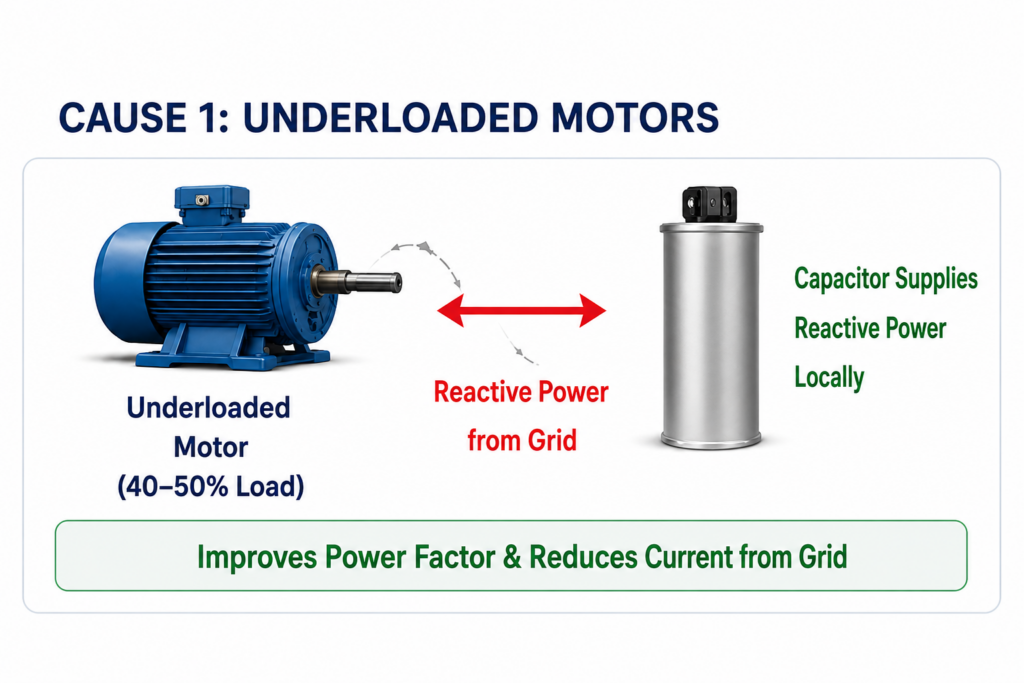
Induction motors are the single biggest contributor to poor power factor. Around 90 percent of industrial loads run on induction motors, and their power factor drops sharply when they operate below their rated load. A motor running at 40 to 50 percent of its rated capacity can pull a power factor as low as 0.5, even though the same motor at full load might sit near 0.85. Utility feeders that serve process plants running below capacity, or industrial units with oversized motors bought for future expansion, see this problem constantly.
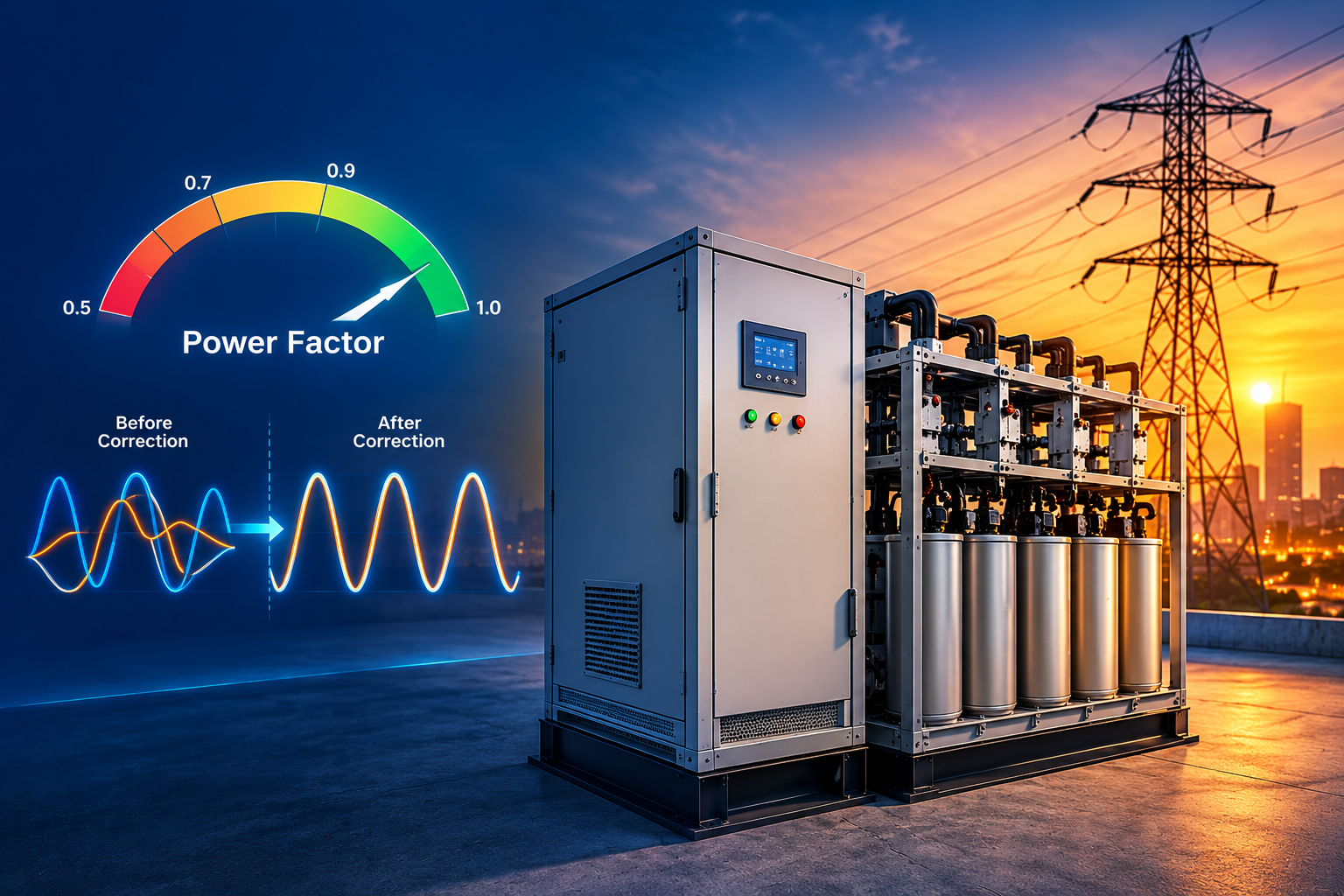
How high powered capacitors help: A capacitor bank sized to the motor’s reactive demand supplies the magnetising current locally. The motor still gets the reactive power it needs, but it no longer has to pull it from the grid. Fixed capacitors at the motor terminals are the simplest and most cost-effective fix here.
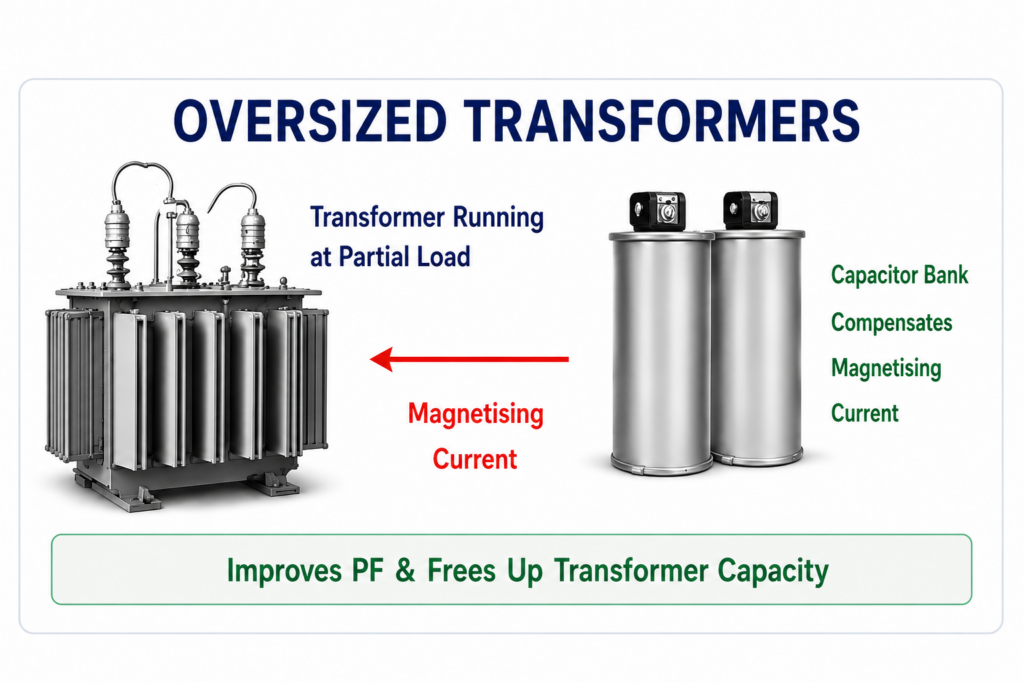
2. Oversized Transformers Running at Partial Load
A transformer selected for future expansion, but running well below its rated capacity today, behaves the same way as an underloaded motor. Its magnetising current stays fixed regardless of the load it is actually carrying, so light loading drags the power factor down.
How High Powered Capacitors Help: Installing a capacitor bank on the transformer’s secondary side offsets the fixed magnetising component. This is especially useful in utility substations where transformer loading varies through the day and across seasons.
3. Idle Machinery and Standby Equipment
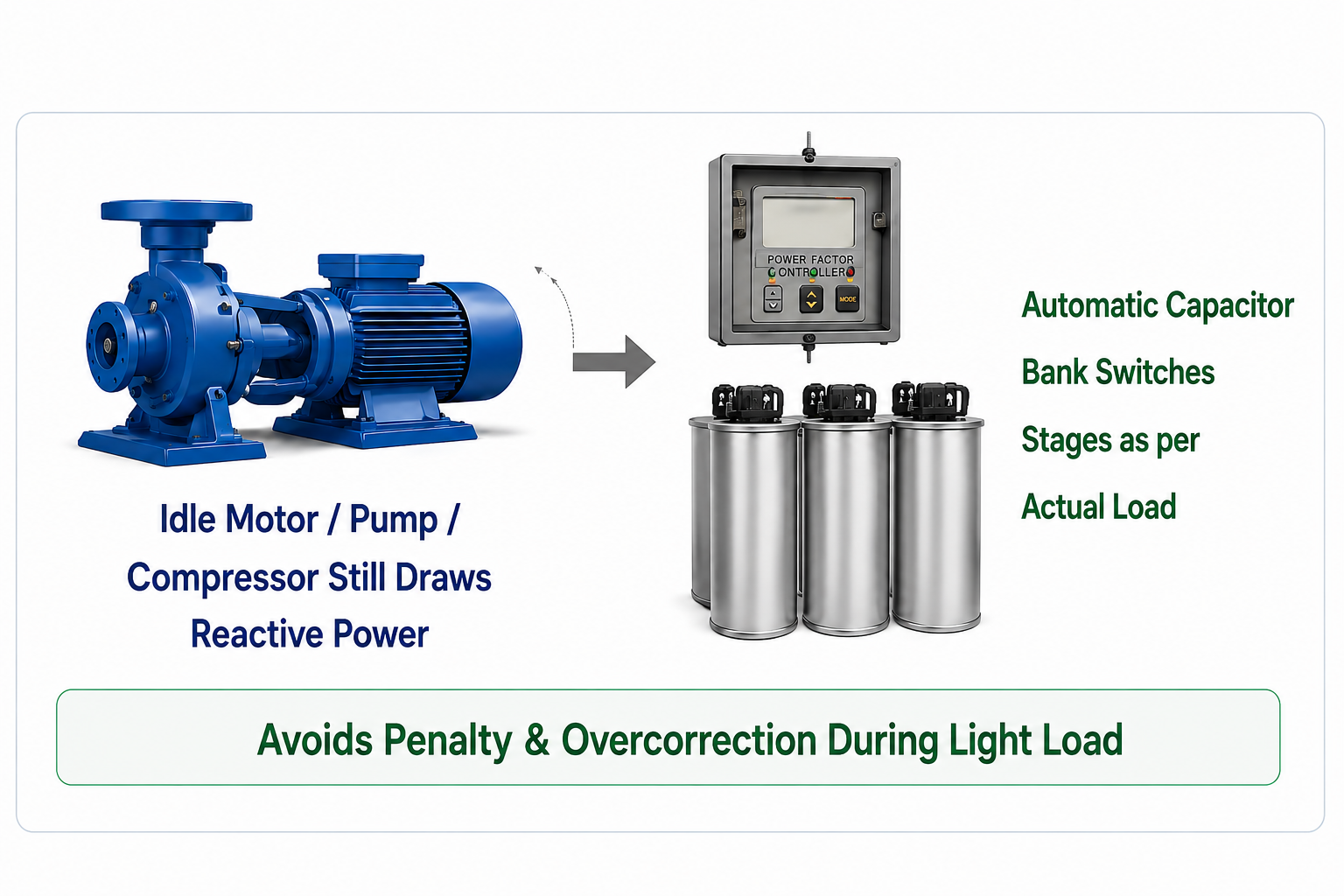
Motors, pumps, and compressors that are switched on but not doing productive work still draw magnetising current. Standby fire pumps, backup compressors, and idle conveyor motors are common examples in industrial plants and utility auxiliary systems.
How high powered capacitors help: Automatic capacitor banks with stage controllers sense the reactive demand in real time. They switch capacitance in only when idle equipment is actually running, avoiding over correction when the plant shuts down.
4. Arc Furnaces, Welding Equipment, and Discharge Lighting
Arc furnaces, resistance welding sets, and discharge lamps such as sodium and mercury vapour fittings all operate at very low lagging power factor by design. These loads are common on utility feeders serving foundries, fabrication units, and street lighting circuits. How high powered capacitors help: Because these loads are highly variable and switch on and off in short bursts, automatic switched capacitor banks work better than fixed banks. The controller adds or removes capacitance in steps to track the load instead of overcorrecting during idle periods.

5. Variable Frequency Drives and Non-Linear Loads
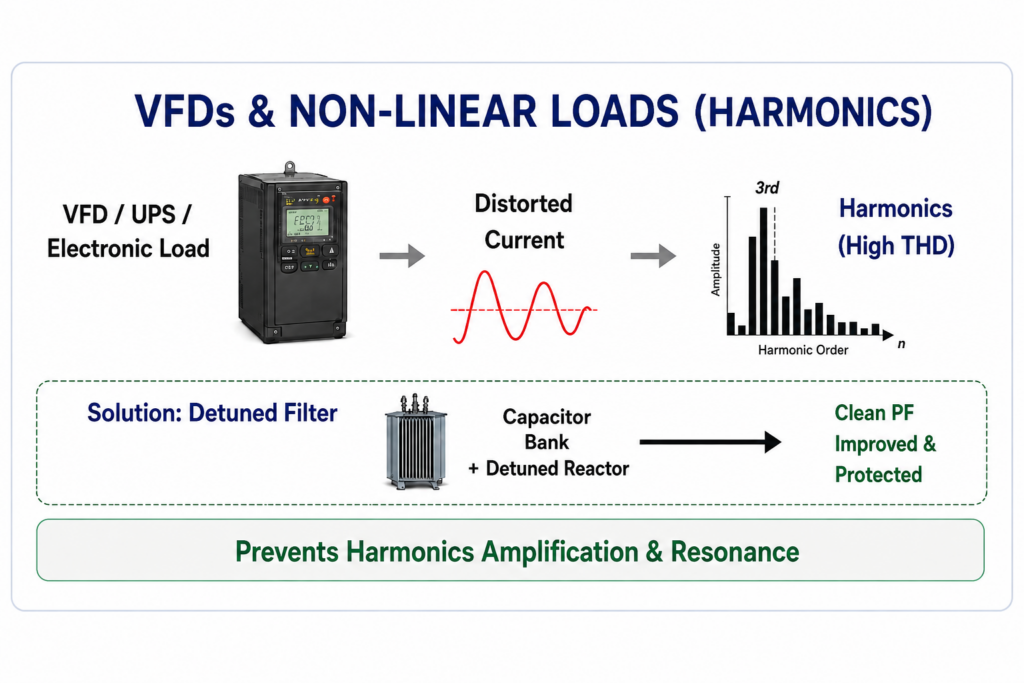
VFDs, UPS systems, and other switched-mode power electronics draw current in short, non-sinusoidal pulses rather than a smooth sine wave. This creates harmonic distortion, which drags down the true power factor even when the displacement power factor looks acceptable on a basic meter.
How High Powered Capacitors Help: Standard capacitors can actually amplify harmonic problems if installed without protection, since capacitive reactance falls as frequency rises and the bank can resonate with the harmonic currents already on the network. The correct fix is a detuned filter, a capacitor bank paired with a series reactor tuned below the lowest troublesome harmonic. This corrects power factor while blocking harmonic resonance, and it protects the capacitor cans themselves from premature failure caused by harmonic overload.
6. Three-Phase Load Imbalance from Poor Wiring
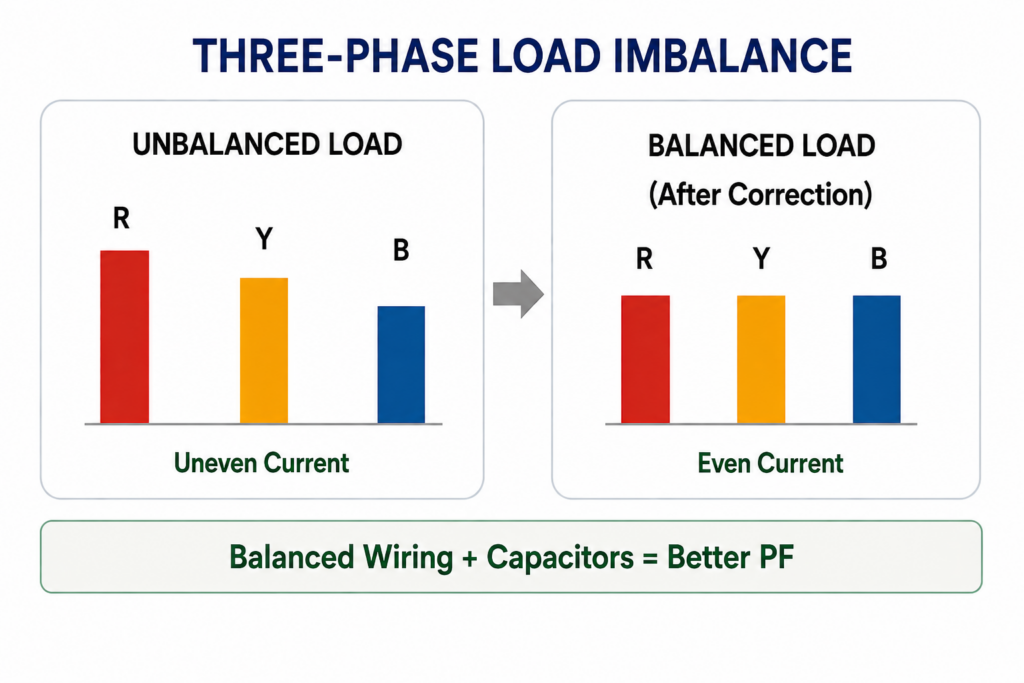
Uneven distribution of single-phase loads across three phases, or loose and undersized connections, creates unbalanced currents. Unbalanced systems rarely deliver their rated power factor, and the imbalance itself adds extra losses on top of the reactive power problem.
How High Powered Capacitors Help: Correcting the wiring imbalance is the first step, but pairing it with a properly phase-balanced capacitor bank restores power factor across all three phases evenly, rather than over-correcting one phase and under-correcting another.
7. No Dedicated Reactive Power Compensation on the Network
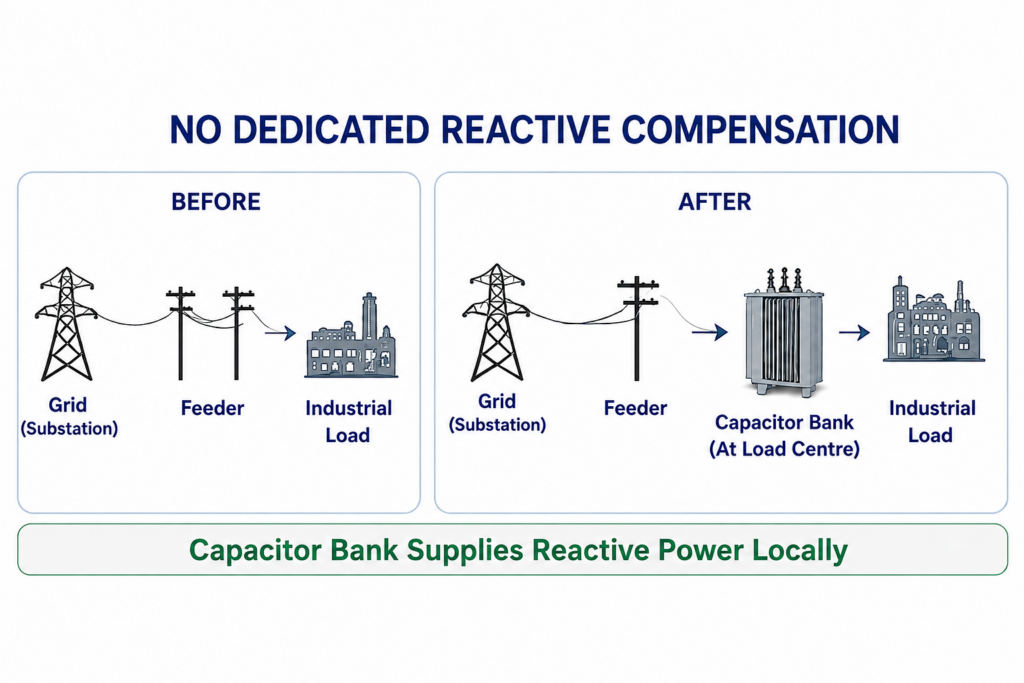
Many older utility feeders and industrial plants were built without any power factor correction equipment at all. Every inductive load on the network pulls its reactive power straight from the grid, all the way from the generating source.
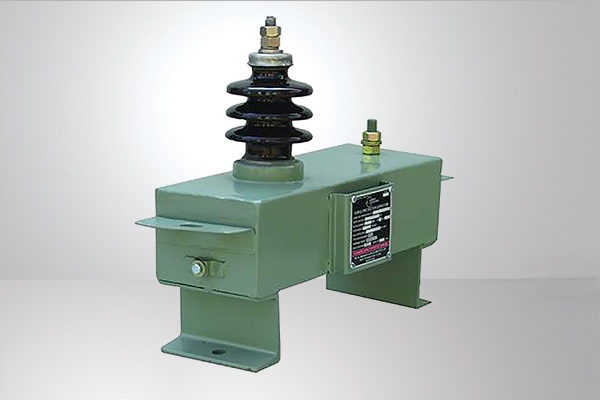
How High Powered Capacitors Help: Installing capacitor banks at the substation or at major load centres is the most direct fix. This is where high powered capacitors do the heaviest lifting, correcting power factor for an entire feeder or plant rather than one machine at a time.
8. Frequent Starting and Stopping of Large Inductive Loads
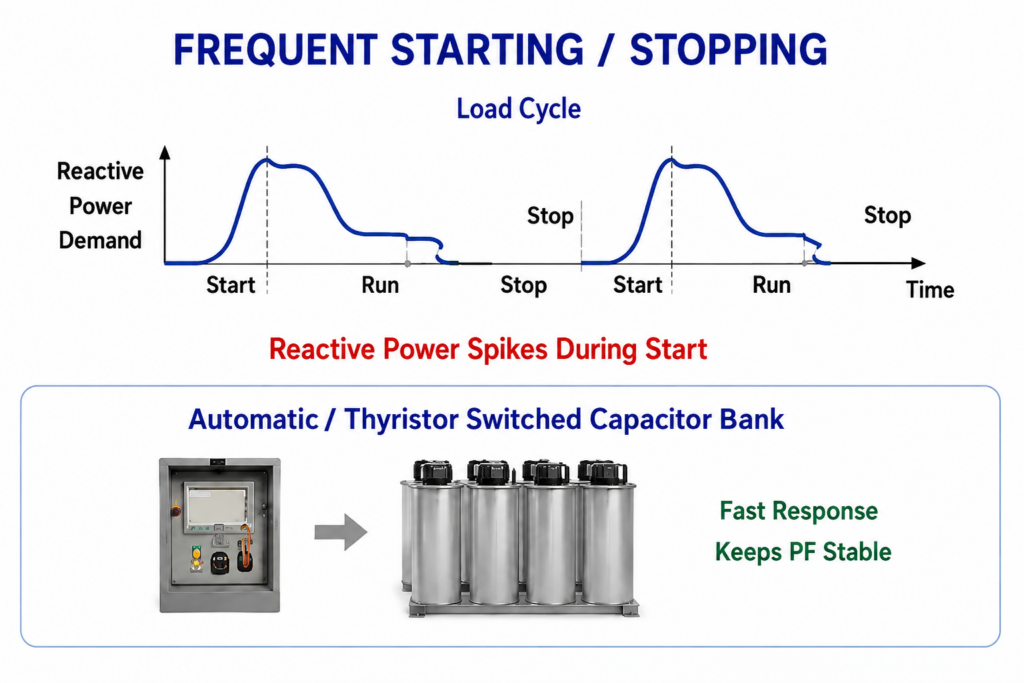
Cranes, crushers, compressors, and large pumps draw a heavy inrush of reactive current every time they start. Frequent starting and stopping, common on utility feeders serving cement plants, steel mills, and material handling units, causes the power factor to swing sharply through the day.
How high powered capacitors help: Automatic capacitor banks with fast-acting thyristor switching respond within a few cycles. This keeps power factor stable through the start-stop cycle instead of only correcting the average load.
9. Long Transmission and Distribution Lines
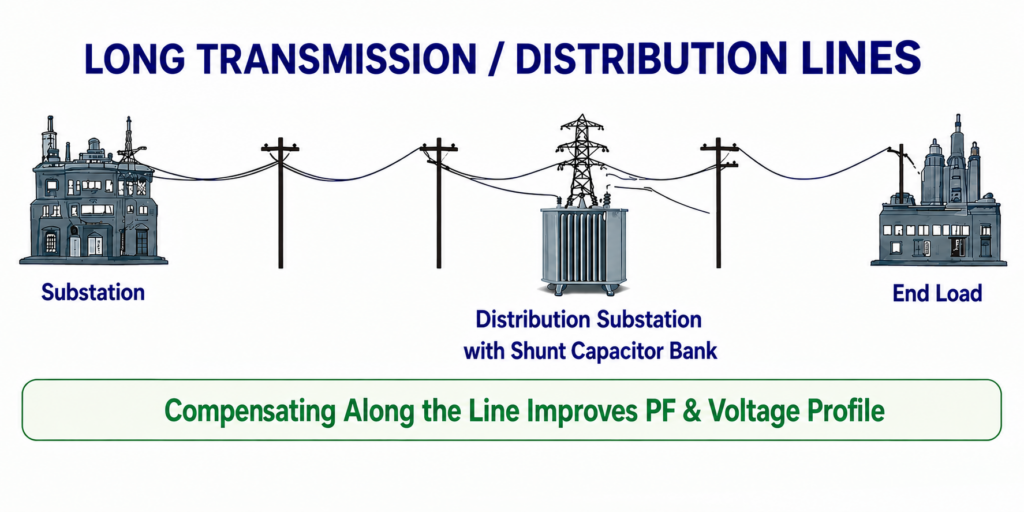
Long feeders and rural distribution lines have significant inductive reactance built into the line itself. The further power travels, the more reactive power it consumes just moving through the network, before it even reaches the load.
How High Powered Capacitors Help: Utilities install shunt capacitor banks at intermediate points along long feeders, often at distribution substations partway down the line. This supplies reactive power closer to the load, reduces the reactive burden on the source end, and improves voltage profile along the entire line. Rural and semi-urban feeders with long spans between substations see the biggest gains from this approach.
10. Light-Load Periods and Voltage Rise
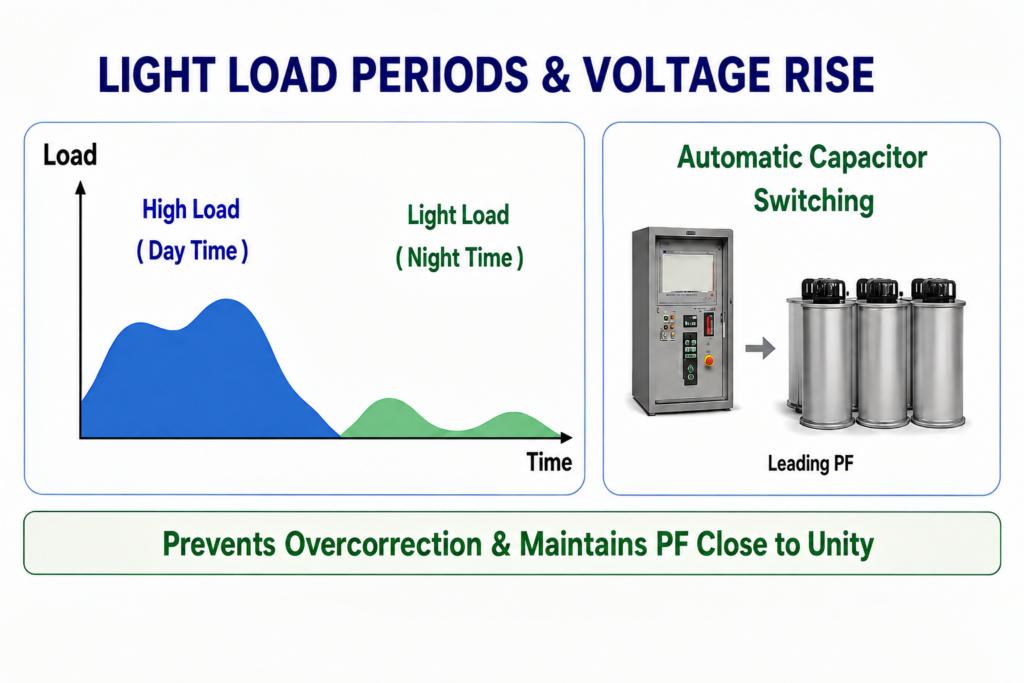
During low-demand periods, typically late at night or on non-working days, line voltage tends to rise. Higher voltage increases the magnetising current drawn by transformers and motors connected to the network, which lowers power factor exactly when the load is lightest.
How High Powered Capacitors Help: This is where fixed capacitor banks can actually cause problems if left connected during light load, since they can push power factor into an over-corrected leading state. The right approach is automatic switching, so capacitance reduces automatically as load drops, keeping power factor close to unity through every load condition.