InTank OnLoad TapChanger (OLTC):Working Principle, Types and Applications

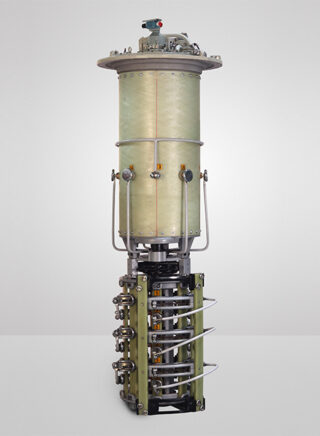
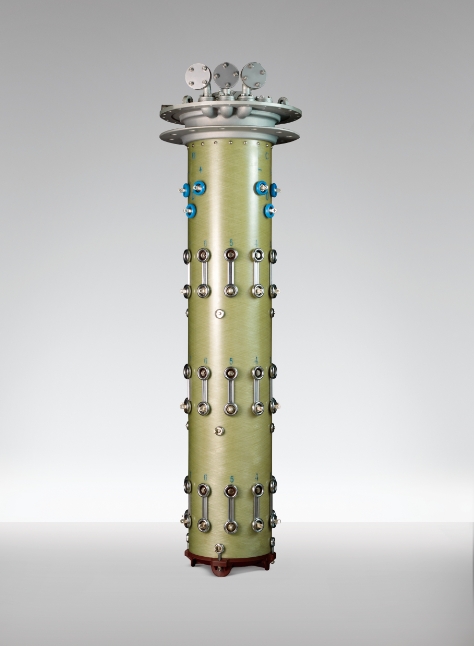
Power transformers must maintain a steady output voltage even when grid load and supply conditions keep changing. An onload tapchanger (OLTC) achieves this by altering the number of active turns in a transformer winding without interrupting the load current. CTR Manufacturing Industries Private Limited has produced intank onload oil tapchangers since 1997 to the design of ELIN OLTC GmbH.The range now covers ratings up to 400 kV and 500 MVA.

INTANK ONLOAD OIL TAPCHANGERS FOR TRANSFORMERS

Working Principle of Intank OnLoad Tapchanger

How Load Transfer Works

In an in-tank design, the tap changer is placed inside the main transformer tank and shares its insulating oil. The tapping winding has several taps, and each one changes the turns ratio by a fixed step. When a voltage correction is needed, the selector prepares the next tap while it carries no current. The diverter switch then moves the load from the old tap to the new one. During this short transfer, transition resistors limit the circulating current, so the load is never interrupted and no winding section is short-circuited.

Tapping Winding Arrangements

The tapping arrangement decides the voltage range and the number of positions available. A linear arrangement adds or removes turns in sequence. A reversing arrangement uses a change-over selector to reverse the polarity of the tap winding, which doubles the regulation range. A coarse-fine arrangement uses two tapping windings to provide a large number of voltage steps. Most CTR types support all three arrangements, although the ID type is intended for linear windings.

The CTR Intank Tapchanger Range

Types for Transmission and Network Transformers

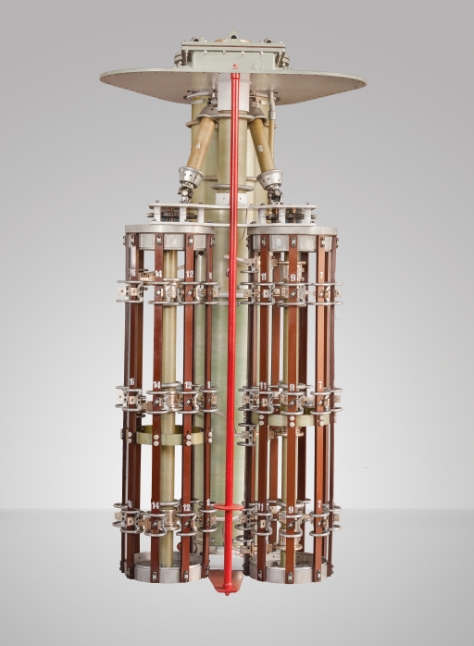
The IS type is the legacy ELIN design and supports up to 35 positions. It is rated up to 300 kV and 2100 A, which makes it suitable for 765 kV transformers, and it also serves furnace applications where the number of operations is large. The IM type is an alternative to the S type, with ratings up to 300 kV and 1800 A. The IV type is a selector switch design for distribution, sub-transmission and transmission applications, and it offers up to 27 positions at 123 kV and 500 A. The ID type serves special legacy transformer designs in transmission systems, providing up to 23 positions at 123 kV and 400 A.
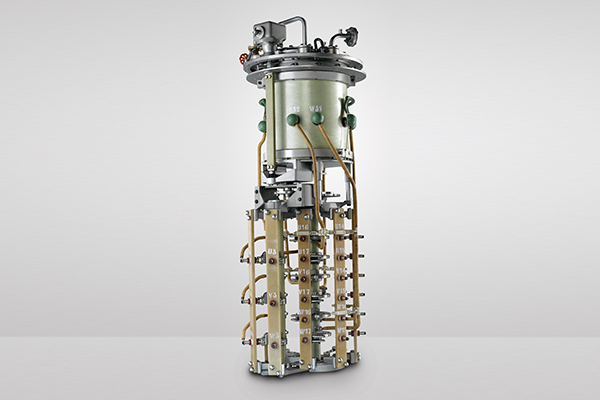
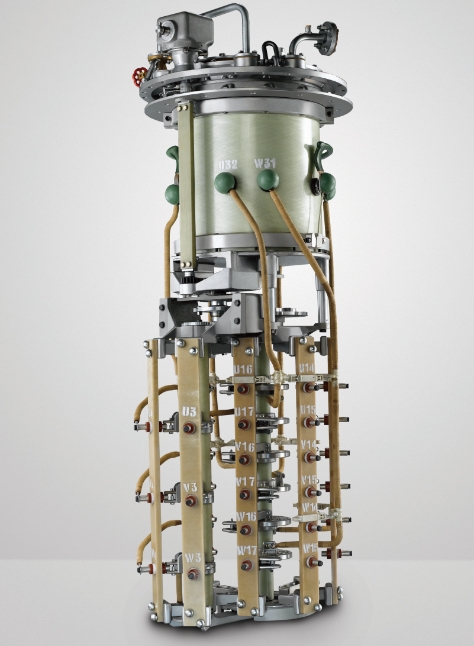
Compact Types for Distribution Transformers

The IJ type is a compact tap changer for distribution transformers used in unitized substations, and it is supplied with an inbuilt online filter. The IL type provides 8 or 16 steps for ratings from 12 kV to 36 kV and 200 A. It suits linear, coarse-fine or reversing windings, which makes it a flexible choice for smaller transformers.

IS Type Tapchanger
IS Type Tapchanger

Tapchanger rating upto 300 kV, 2100 A suitable for transformers of 765 kV

IM Type Tapchanger

Tapchanger rating upto 300 kV, 1800 A suitable for transformers of 765 kV

IV Type Tapchanger
IV Type Tapchanger

Tapchanger rating upto 123 kV, 500 A suitable for industrial transformers

ID Type Tapchanger
ID Type Tapchanger

Tapchanger rating upto 123 kV, 400 A suitable for network transformers

Applications and Compatibility

These tap changers are used mainly in transmission and network transformers, where they maintain grid voltage as demand rises and falls. The IV type also serves industrial transformers.They are compatible with SCADA and modern data communication equipment, which allows remote monitoring and control. They are also suitable for ester fluid-filled transformers, which is relevant as utilities adopt alternative insulating fluids.

Standards and Compliance

Every design is type tested as per IEC 60214 and IS 8468, which confirms its mechanical, dielectric and switching performance. Choosing the right tap changer depends on the voltage class, rated current, number of positions and winding arrangement. With correct selection, CTR’s in-tank range provides reliable voltage regulation for applications from compact distribution units to 765 kV transmission transformers.