Flange Mounted Onload Tapchangers for High Voltage Transformers
Grid voltage never stays fixed. Load changes through the day. Weather changes demand. Renewable sources add their own swings. A transformer has to absorb all of that without dropping output quality. That is the job of an onload tapchanger. Flange mounted onload tapchangers do this job for high voltage transformers used in transmission, sub-transmission, and distribution networks. This guide covers how they work, where they fit, what standards govern them, and what to check before you specify one.
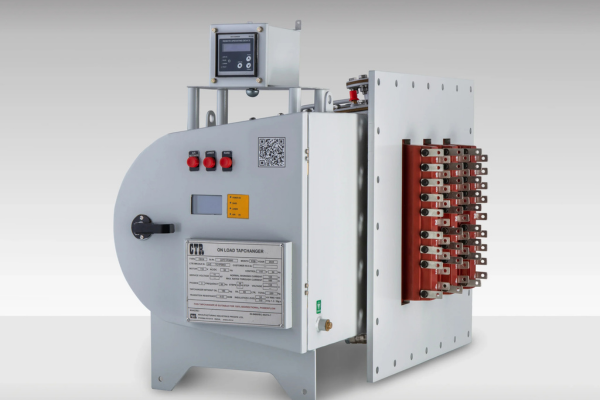
What is a Flange Mounted Onload Tapchanger?
An onload tapchanger, or OLTC, changes the turns ratio of a transformer winding while the transformer stays energized and under load. It adjusts the output voltage in small steps without interrupting supply. “Flange mounted” describes how the tapchanger attaches to the transformer. The tapchanger has its own oil-filled housing. This housing bolts directly onto a flange on the transformer tank wall. This is the reason that in some countries it is also referred as bolt on type tapchanger. The selector switch or diverter switch and the drive mechanism is mounted inside this housing, This connects through the barrier board to the winding taps inside the transformer.
This is different from a turret mounted design or intank design, where the tapchanger sits on top of the transformer cover. Flange mounting keeps the connection short and direct, which suits high voltage delta and star winding configurations where terminal access from the side works better than access from above.
How a Flange Mounted OLTC Works?
The tapchanger has two main parts working together.
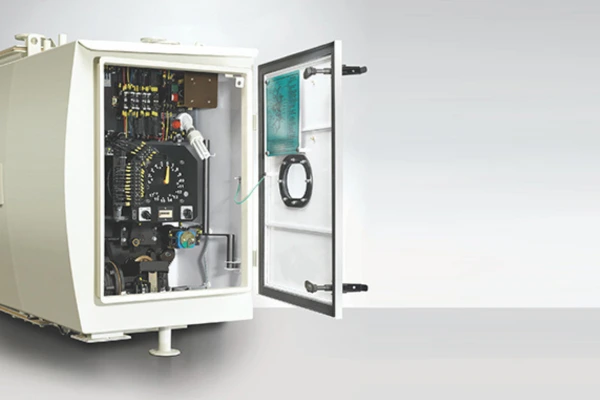
Drive Mechanism:This is the drive which operates the tapchanger. Although the operation is motorized, provision exists to operate manually.
Selector Switch. This carries the actual load current and makes the transition from one tap to the next. It bridges two taps for a fraction of a second, so current never breaks during the switch.
The transformer keeps supplying power during the entire time.
Non Vacuum Type vs Vacuum Interrupter Type
Oil immersed tapchangers fall into two broad families.
Non Vacuum Type:The tapchanger switching phenomena occurs in oil with interruption of switching arc in oil. This is the traditional design, proven over decades of field use, and it remains the standard choice for most high voltage flange mounted applications.
Vacuum Interrupter Type:A vacuum interrupter breaks the arc inside a sealed vacuum bottle instead of oil. This keeps arcing byproducts out of the main oil compartment entirely, which cuts down on oil testing and maintenance frequency.
Both types are covered under international tapchanger standards, and the right choice depends on maintenance philosophy, duty cycle, and total cost of ownership over the transformer’s life. Because the switching mechanism sits in its own oil compartment, separate from the transformer’s main tank, arcing and contact wear stay isolated. This keeps the transformer’s main insulating oil clean and extends maintenance intervals on the tank itself.
Flange Mounted vs Other Mounting Types
Not every high voltage transformer suits the same tapchanger mounting style. Here is how flange mounting compares.
Mounting Type | Where It Sits | Best Suited For |
Flange mounted | Bolted to a side wall flange on the transformer tank | Delta and star windings needing short, direct connections; high voltage transmission and sub-transmission transformers |
Turret mounted | On top of the transformer cover | Designs where top access is easier than side access; common on medium power transformers |
In-tank |
| Better footprints for extra high voltage ratings |
Flange mounting avoids two problems that come up with other layouts. It does not add height above the transformer cover, and it does not require maintenance crews to work inside the main tank to service the tapchanger. Both the tapchanger and its drive mechanism stay accessible from ground level or a service platform, which shortens outage windows during maintenance.
Where Flange Mounted OLTCs Fit
Flange mounted onload tapchangers are built for high voltage transformers across a wide voltage band. CTR’s flange mounted range covers voltage ratings from 11 KV up to 132 KV, with current ratings up to 600A. It is also the only flange mounted tapchanger design suitable for 132 kV delta applications, which makes it relevant wherever delta-connected high voltage windings need onload regulation.
Typical applications include:
- Transmission and network transformers, where a 16 step, 17 position configuration is common for holding grid voltage within a tight band.
- Sub-transmission transformers feeding regional distribution networks.
- Distribution transformers where voltage stability affects downstream industrial and commercial loads.
- Delta and star connected transformers, since the design supports both winding configurations.
- Linear, coarse-fine, and reversing winding types, so the same tapchanger family adapts to different transformer designs.
- Renewable integration points, such as solar and wind feeder transformers, where generation swings push voltage outside normal bands more often than on a conventional feeder.
This range of fit is why flange mounted OLTCs show up across utility substations, industrial power transformers, and renewable integration projects where voltage swings are more frequent than on a stable, conventional grid connection.
Key Benefits of Flange Mounted Onload Tapchangers
Continuous Voltage Regulation-Voltage stays within the required band without taking the transformer offline. For critical loads, this uninterrupted regulation is non-negotiable.
Compact Tank Connection-Side mounting through a flange keeps the tapchanger close to the winding taps. Shorter internal connections mean lower loss and simpler routing inside the tank.
Built for Delta Applications-Star-connected tapchangers are common. A flange mounted design rated for 132kV delta service is not, which matters if your transformer design calls for delta windings at higher voltage.
SCADA and Remote Monitoring Ready-Modern flange mounted OLTCs are compatible with SCADA systems and other data communication platforms. This lets utilities monitor tap position, operation counts, and drive health remotely, instead of relying on manual site checks.
Durability Under Repeated Switching-Transmission and network transformers cycle taps often to track grid voltage. A tapchanger built for high step counts, such as16 step, 17 position units, is designed to handle this switching frequency over a long service life.
Easier Maintenance Access-Because the tapchanger and its drive sit outside the main tank on a flange, service crews reach the switching compartment without opening the transformer itself. That shortens planned maintenance windows.
Flexible Configuration-Step voltage, current rating, and winding type can be matched to the transformer, rather than forcing a transformer design around a fixed tapchanger.
Protection and Safety Features
A flange mounted OLTC is not just a switch. It carries its own protection layer, separate from the main transformer’s protection scheme.
Liquid Flow Relay-Installed in the pipe between the tapchanger compartment and its oil conservator, this relay detects abnormal oil flow caused by an internal fault. It trips the transformer before the fault escalates.
Sealed Switching Compartment-Keeping the diverter switch oil separate from the main tank oil means contamination from arcing stays contained. It also means the tapchanger’s own oil condition can be tested and serviced independently of the transformer.
Mechanical Interlocks-These prevent the tapchanger from operating out of sequence, which protects against a fault condition where load current tries to flow through the wrong contact path.
Overload Tolerance-Tapchangers built to recognized performance standards are designed to support the transformer’s emergency loading conditions, including elevated top-oil temperatures during short-term overload, without restricting the transformer’s own overload rating.
Standards and Compliance
Flange mounted onload tapchangers for high voltage transformers are typically designed and tested against IEC 60214-1, which sets performance requirements and test methods for both on-load and de-energized tapchangers and their motor drive mechanisms. This standard covers nameplate ratings, construction requirements, compartment separation, interlocks, and both type and routine test procedures.
IEC 60214-2 complements this with application guidelines, helping transformer designers match the right tapchanger type, resistor or vacuum, to a given winding and duty cycle.Where a project follows IEEE conventions instead, IEEE Std C57.131 covers equivalent ground. Specifying a tapchanger that is designed and tested to these standards gives you a documented basis for acceptance testing, commissioning checks, and long-term asset management, rather than relying on a manufacturer’s word alone.
Technical Specifications to Check
When you are specifying a flange mounted onload tapchanger for a high voltage transformer, confirm these points against your transformer design:
- Rated voltage (Um), typically 12kV to 145kV for flange mounted ranges.
- Current rating, up to 600A depending on the model.
- Number of tap positions, commonly ranging from 9 up to 33 positions depending on the regulation range needed.
- Winding connection, delta or star
- Winding type, linear, coarse-fine, or reversing
- Diverter switch type, resistor or vacuum interrupter
- Communication compatibility, including SCADA integration
- Applicable performance standard, such as IEC 60214-1 or IEEE Std C57.131
Getting these right at the design stage avoids rework later. A tapchanger sized for the wrong current rating or winding type will not fit the transformer’s actual operating profile.
Installation and Maintenance Considerations
Flange mounted OLTCs are built for long service life, but a few practices keep them running to spec.
Commissioning Checks-Before energizing, verify tap position indication matches actual winding connection, confirm the liquid flow relay is armed correctly, and check that the motor drive’s mechanical limit switches align with the selector’s physical end positions.
Routine Oil Testing-Because the switching compartment holds its own oil, it should be tested and, where the design calls for it, changed on its own schedule, separate from the main transformer oil.
Operation Counters-Most drive mechanisms log the number of tap change operations. Tracking this count against the manufacturer’s rated contact life is the simplest way to plan diverter switch inspection before wear becomes a problem.
Access planning-Since the flange mounted design keeps the tapchanger and drive outside the main tank, most routine inspection and minor servicing can happen without a full transformer outage. Plan inspection windows around this advantage rather than bundling every check into a major outage.
Why CTR for Flange Mounted OLTCs
CTR manufactures flange mounted onload tapchangers built for the voltage and current demands of high voltage transformers, from 33kV distribution applications up to132kV delta service. Every unit is engineered for smooth voltage regulation, high durability under repeated switching, and compatibility with modern SCADA setups.
If you are specifying a tapchanger for a transmission, sub-transmission, or distribution transformer, our engineering team can help match the right configuration, voltage rating, current rating, winding type, and diverter switch design, to your project’s load profile.
FAQ
A flange mounted OLTC bolts onto the side wall of the transformer tank through a flange. A turret mounted OLTC sits on top of the transformer cover. Flange mounting suits designs where side access to the winding taps is more practical, including many delta-connected high voltage windings, and it keeps the tapchanger accessible without adding height above the transformer.
Yes. This is one of the few flange mounted OLTC designs built specifically for 132kV delta applications, in addition to standard star-connected configurations.
No. The diverter switch bridges two taps briefly, using either transition resistors or a vacuum interrupter, so load current never breaks during the switch.
Flange mounted onload tapchangers are typically available up to 600A, with the exact rating depending on the transformer’s voltage class and load requirements.
Yes. Modern units support SCADA and other data communication systems, so operators can monitor tap position and operation history remotely.
IEC 60214-1 sets performance and test requirements for on-load tapchangers and their drive mechanisms. IEC 60214-2 provides application guidance for selecting the right type. IEEE Std C57.131 covers equivalent requirements for projects following IEEE conventions.
This depends on the diverter switch type and the operation count logged by the drive mechanism. Oil switching tapchangers generally need inspection sooner than vacuum interrupter types, since contact wear from arcing happens in oil rather than inside a sealed vacuum bottle. Tracking operation counts against the manufacturer’s rated contact life is the standard way to plan inspections.
REACH US
THANK YOU!
We've received your message and
we'll get back to you soon!