Advanced Onload Tapchanger (OLTC) Solutions for Power and Distribution Transformers
CTR is an experienced Onload Tapchanger Manufacturer in India. They are offering engineered OLTC solutions for power transformers, distribution transformers, furnace transformers, rectifier transformers and other high-voltage transformer applications.
An Onload Tapchanger (OLTC) is a transformer switching device that makes it possible to change the voltage ratio of the transformer when it is energized and connected to the load. An OLTC changes the effective number of turns in the regulating winding to maintain the required secondary voltage for varying system voltage and load conditions.
CTR’s Onload Tapchanger portfolio includes flange-mounted OLTCs, intank oil OLTCs, vacuum OLTCs, ester-oil OLTCs, dry-type vacuum OLTCs and dry-type air-switching OLTCs. Also providing solutions for different transformer constructions, insulation systems, voltage classes and duty requirements.
What Is an Onload Tapchanger?
The basic voltage relationship can be represented as:
V₁ / V₂ ≈ N₁ / N₂
where:
- V₁ = primary voltage
- V₂ = secondary voltage
- N₁ = number of primary winding turns
- N₂ = number of secondary winding turns
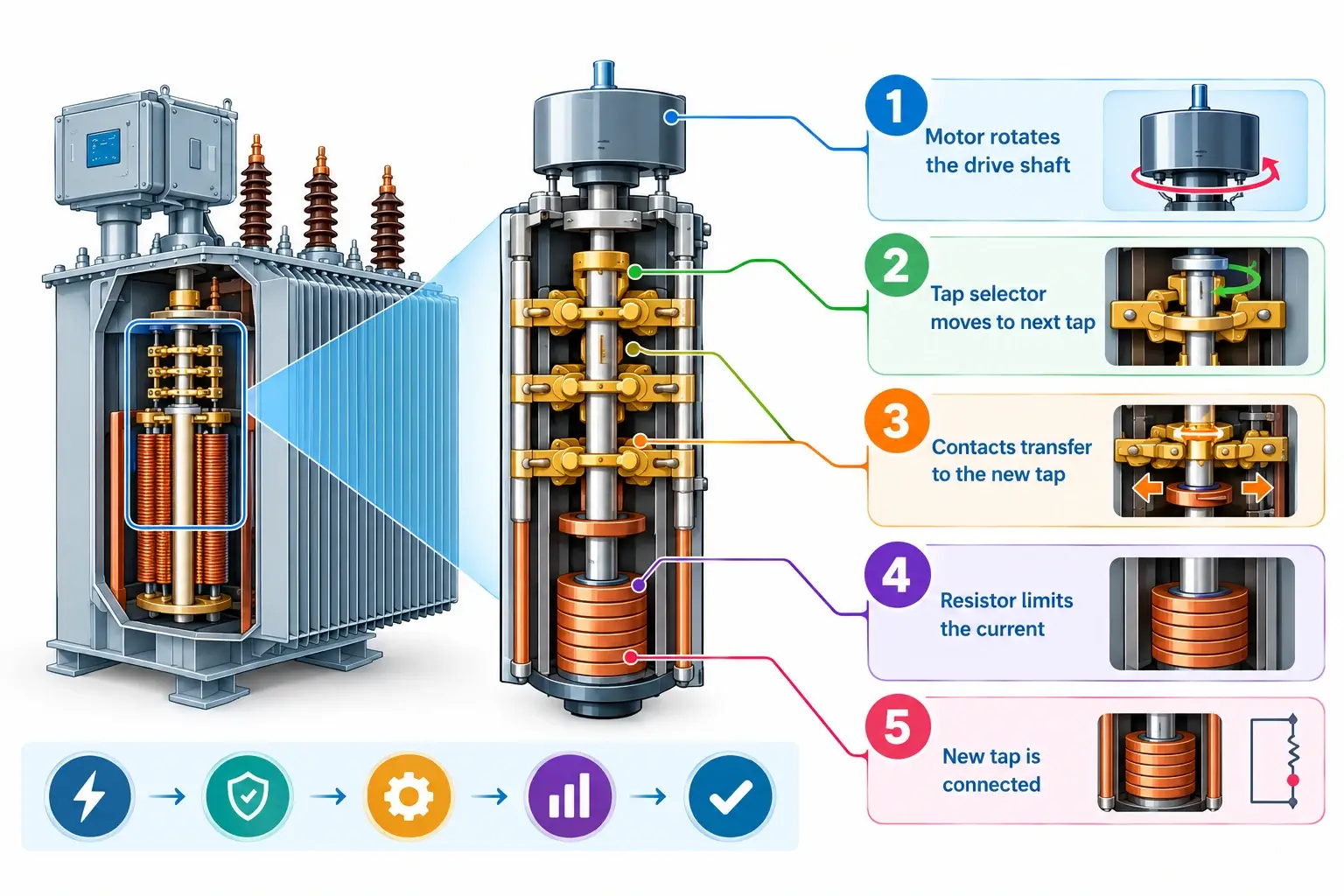
Changing the selected tap changes the effective turns ratio and consequently adjusts the transformer output voltage. The tapchanger performs this operation through a controlled switching sequence. These switches are designed to prevent interruption of the load current. Also to avoid an unacceptable short circuit between adjacent taps.
How an Onload Tapchanger Works?
A typical OLTC consists of several coordinated mechanical and electrical components, including:
- Tap selector
- Diverter switch
- Transition resistors or reactors, depending on design
- Motor-drive mechanism
- Position indication system
- Control and protection circuits
- Mechanical drive transmission
- Tap position sensing
- Auxiliary contacts
- OLTC compartment or switching chamber
During a tap change, the mechanism first selects the required tap and then transfers the load current through the appropriate switching path. The transition impedance limits circulating current when two adjacent taps are temporarily connected during the switching sequence. This allows the tap position to be changed without interrupting the transformer load. The exact switching sequence depends on the OLTC design and whether the tapchanger uses resistor-type, reactor-type, oil-switching or vacuum-switching technology.
CTR Onload Tapchanger Product Range
CTR provides multiple OLTC technologies because no single tapchanger configuration is suitable for every transformer.
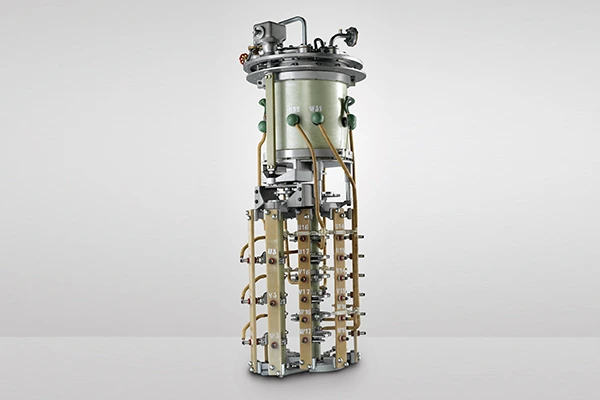
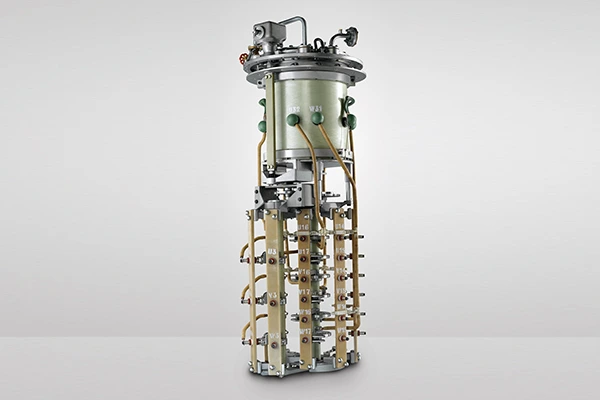
Flange-Mounted Onload Tapchanger
CTR flange-mounted OLTCs are designed for transformer applications where the tapchanger is mounted externally through the transformer tank flange. These OLTCs are available in configurations suitable for distribution, sub-transmission and transmission transformers.
Depending on the model, the range includes:
- Voltage ratings extending into high-voltage applications
- Different rated through-current capabilities
- Multiple tap positions
- Linear winding arrangements
- Reversing arrangements
- Coarse-fine arrangements
- Different transition configurations
The design can also be integrated with motor-drive mechanisms and modern tapchanger control systems.
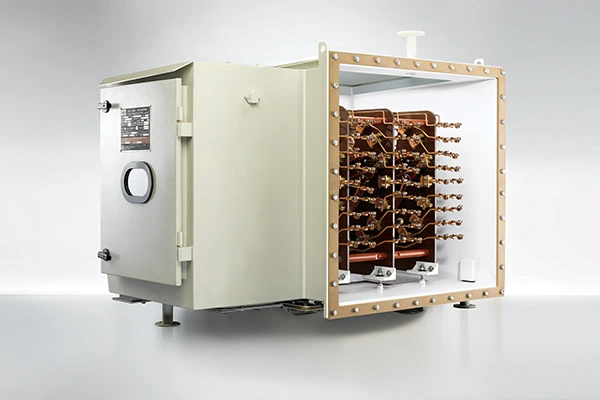
Intank Onload Oil Tapchanger
In an intank OLTC, the tapchanger is installed inside the transformer tank and operates within the transformer insulation system.
CTR’s intank oil OLTC range is designed for applications including:
- Power transformers
- Distribution transformers
- Industrial transformers
- Transmission transformers
- Network transformers
Different configurations are available depending on the transformer winding arrangement, voltage class, current requirement and number of tap positions.
Intank construction can provide a compact transformer arrangement while allowing the OLTC to be integrated into the transformer tank design.
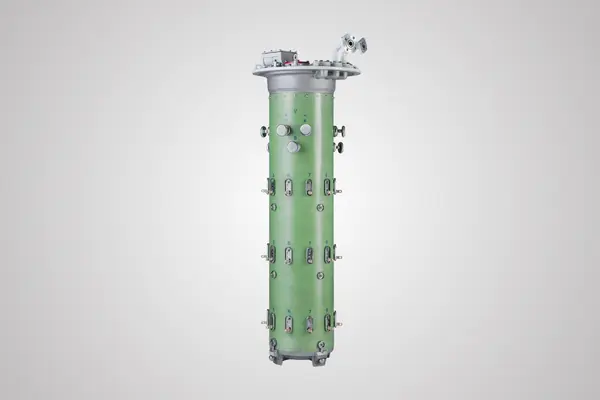
Vacuum Onload Tapchanger
CTR offers vacuum OLTC solutions for applications requiring modern switching technology and reliable voltage regulation. Within the vacuum interrupter , the arc is extinguished and the electrical circuit is separated.
Engineering benefits may include:
- Less contact means less erosion applications
- Lower contamination of the switching medium
- Less maintenance requirements
- Longer service intervals
- Better switching performance
- Good for frequent tapping applications
CTR offers vacuum OLTC solutions for applications needing modern switching technology and reliable voltage regulation.
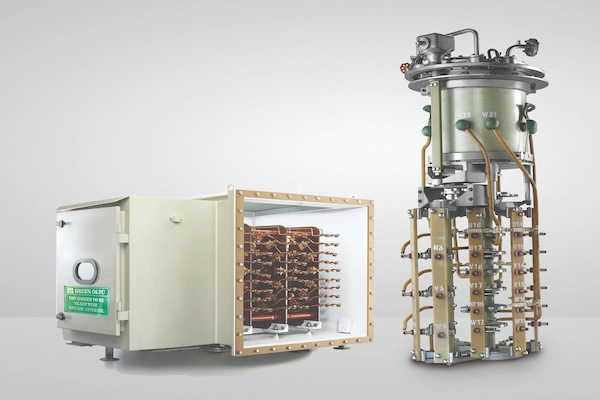
Ester-Oil Onload Tapchanger
Modern transformer designs increasingly use natural or synthetic ester fluids where fire safety, environmental considerations or specific insulation requirements influence the transformer design. CTR provides Onload Tapchangers for ester-filled transformers in suitable configurations. The selection of an OLTC for ester applications requires consideration of:
- Dielectric properties of the insulating fluid
- Switching characteristics
- Thermal performance
- Current rating
- Voltage class
- Transformer insulation coordination
- Switching frequency
CTR’s ester-oil OLTC solutions are designed for transformer applications using ester-based insulating fluids.
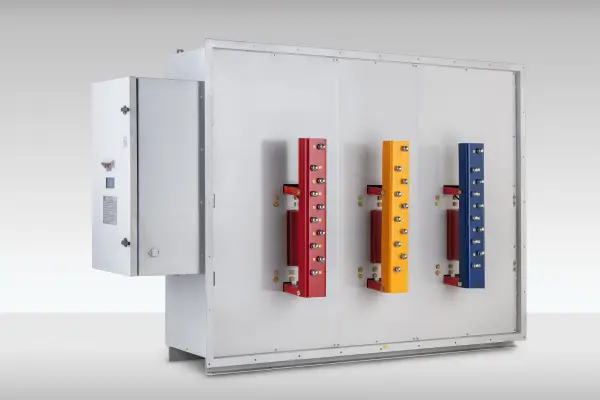
Dry-Type Vacuum Onload Tapchanger
Dry-type and cast-resin transformers require a different approach to tapchanging because conventional oil-based OLTC construction is not applicable in the same manner.
CTR offers dry-type vacuum Onload Tapchangers for suitable dry-type and cast-resin transformer applications.
Vacuum switching provides controlled switching without relying on transformer oil as the switchingThese OLTCs can be considered for applications when: medium.
These OLTCs can be considered for applications when:
- Construction of dry type transformer is needed
- Need frequent voltage regulation
- Compact construction is important
- Preferably less switching-medium maintenance
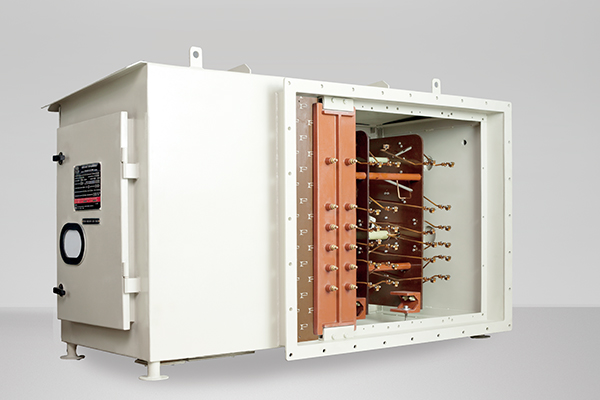
Dry-Type Air-Switching Onload Tapchanger
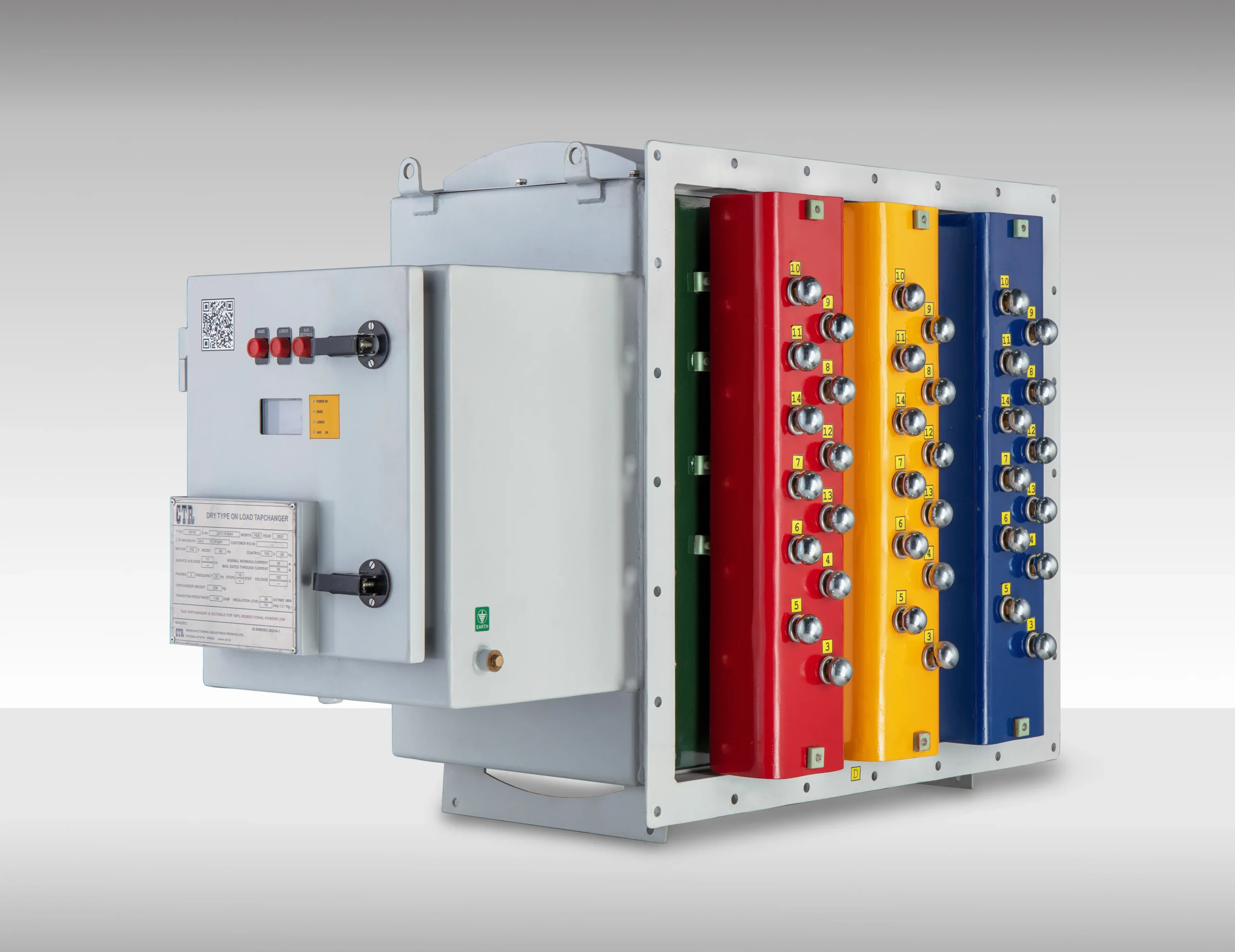
CTR also offers dry-type air-switching OLTC solutions. In this design, switching occurs in air rather than in transformer oil. Such configurations can be used with suitable dry-type and cast-resin transformer designs.
The appropriate configuration depends on transformer voltage, current, tap range, switching duty and winding arrangement.
Suitable for Unidirectional/ Bidirectional power flow.
- For rating of 12kV, 100 Amps
- Switching occurs in air ensuring no degradation of insulating medium
- Compatible for application with SCADA
- Also Compatible with modern data communication protocols
Technical Parameters for Selecting an OLTC
Selecting an Onload Tapchanger Manufacturer in India should not be based only on voltage rating. The OLTC must be correctly matched with the electrical and mechanical characteristics of the transformer.
Important selection parameters include:
| Parameter | Why It Matters |
| Rated voltage | Determines insulation and switching requirements |
| Rated through-current | Defines continuous load-current capability |
| Tap range | Determines available voltage regulation |
| Number of tap positions | Defines regulation resolution |
| Winding connection | Determines tap-selector arrangement |
| Step voltage | Determines voltage change per tap |
| Switching duty | Influences contact and interrupter requirements |
| Number of operations | Important for mechanical endurance |
| Transformer insulation | Determines suitable OLTC technology |
| Installation type | Flange-mounted or intank configuration |
| Switching technology | Oil, vacuum or air switching |
| Drive mechanism | Determines operating speed and control |
| Control system | Enables automatic voltage regulation |
| Operating environment | Influences thermal and mechanical design |
OLTC Tap Range and Voltage Regulation
A typical OLTC consists of several coordinated mechanical and electrical components, including:
For example, an OLTC specified as ±10% with 17 positions provides a defined voltage regulation range around the nominal tap, with the actual step voltage determined by the winding and tap arrangement.
The relationship between tap position and voltage should always be evaluated with the transformer’s:
- Rated voltage
- Number of turns
- Winding configuration
- Short-circuit impedance
- Load profile
- System voltage variation
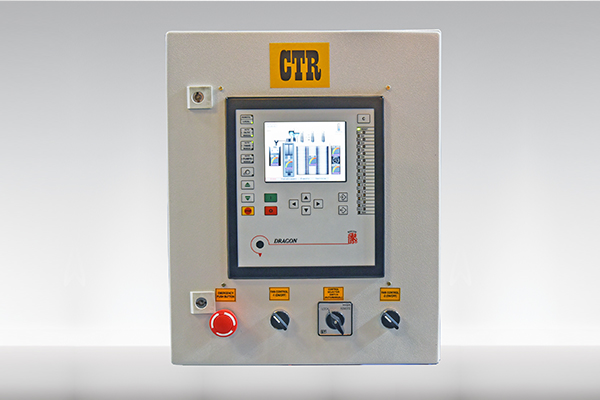
OLTC Control and Health Monitoring
- Tap position
- Number of tap operations
- OLTC temperature
- Transformer oil temperature
- Winding temperature
- Oil level
This information can be integrated into a SCADA or transformer monitoring system, allowing operators to identify abnormal operating conditions and plan maintenance more effectively.
Onload Tapchanger Applications
CTR OLTC solutions can be used across a broad range of transformer applications.
Power Transformers
OLTCs help maintain the required network voltage despite changes in load and system voltage.
Distribution Transformers
They can compensate for voltage variations and maintain an appropriate supply voltage on distribution networks.
Furnace Transformers
Furnace transformers can experience rapidly changing load conditions and high numbers of tap operations. The OLTC must therefore be selected according to the required operating duty.
Rectifier Transformers
OLTCs provide controlled voltage adjustment for industrial rectifier applications where process voltage requirements may vary.
Industrial Transformers
Manufacturing plants and heavy industries can use OLTCs to compensate for changing plant loads and incoming supply variations.
Renewable Energy Systems
Variable generation and changing grid conditions can increase voltage-regulation requirements, making OLTCs an important component in suitable transformer applications.
Why Choose CTR as an Onload Tapchanger Manufacturer in India?
CTR combines OLTC manufacturing, transformer application knowledge, switching technology and control-system expertise to provide engineered tapchanger solutions.
Proven OLTC Engineering Experience
Multiple Switching Technologies
Customers can select from conventional oil, vacuum, ester-fluid and dry-type solutions according to transformer requirements.
Wide Voltage and Current Range
CTR’s OLTC portfolio covers applications ranging from distribution and industrial transformers to high-voltage transformer systems.
Onload Tapchanger Manufacturer India – Technical Expertise for Transformer Applications
Choosing the right Onload Tapchanger Manufacturer in India is critical because OLTC performance directly influences transformer voltage regulation, switching reliability and maintenance requirements.
CTR provides OLTC solutions engineered around the complete transformer application rather than selecting a tapchanger based on a single rating.
Whether the requirement is a flange-mounted OLTC, intank oil OLTC, vacuum OLTC, ester-oil OLTC or dry-type OLTC, CTR can provide a configuration based on the transformer’s voltage class, current, tap range, winding arrangement and operating duty.
Looking for an Onload Tapchanger for your transformer?
Share your transformer specifications with CTR’s engineering team to identify the appropriate OLTC configuration.
REACH US
THANK YOU!
We've received your message and
we'll get back to you soon!